


Opinion Article
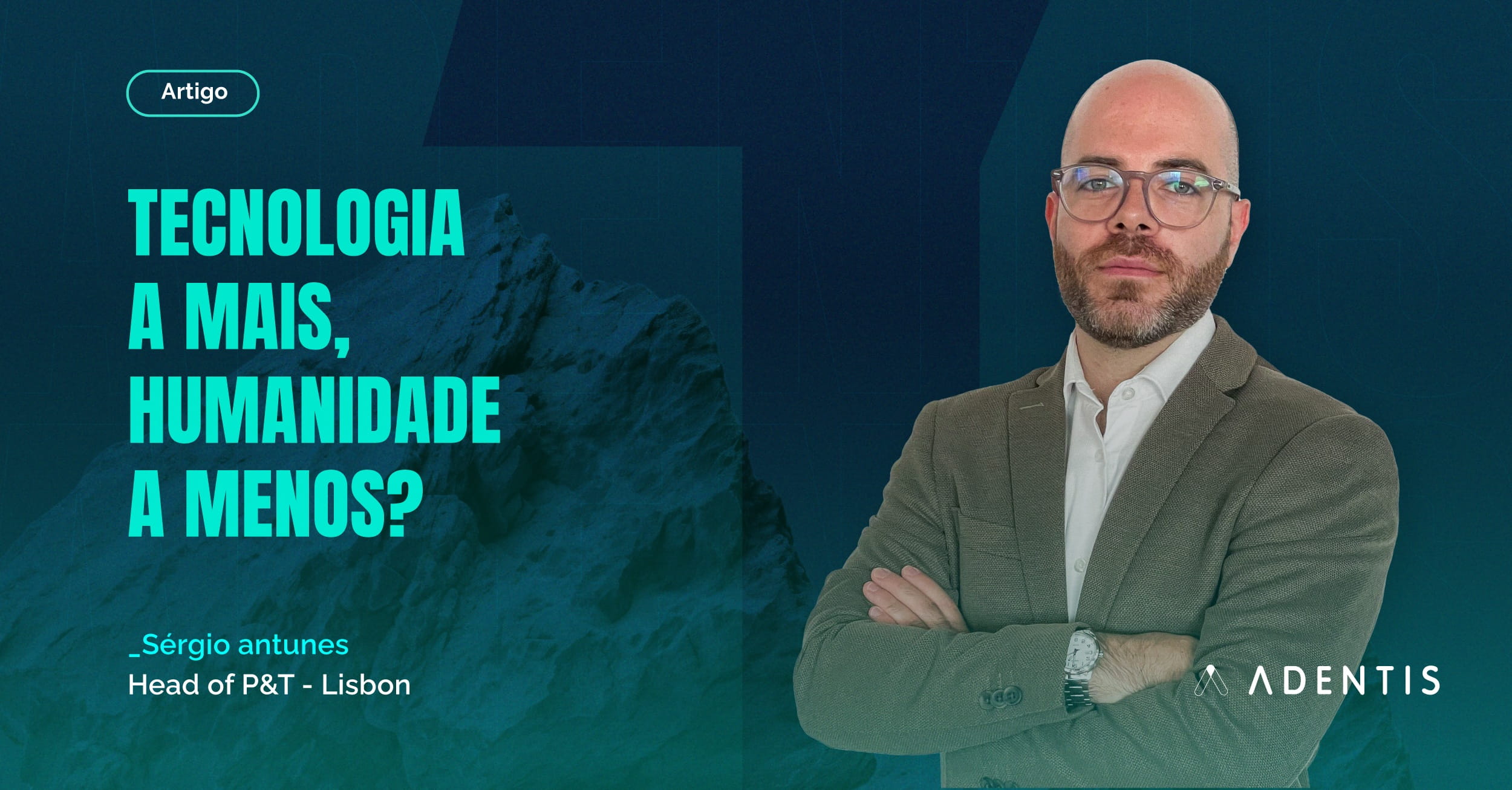
Too much technology, too little humanity?
Artificial intelligence entered recruitment with clear promises: greater efficiency, faster processes, and more accurate decision-making. In many respects, it is delivering on those promises. However, it has also brought about a less frequently discussed consequence: increased anxiety, distrust, and noise in an already demanding labour market.
Today, a significant proportion of recruitment processes incorporate intelligent automation. CV screening, skills assessment, and candidate scoring are now carried out at a speed and scale that would have been unimaginable just a few years ago. This evolution has undeniable value, freeing recruiters from time-consuming administrative tasks so they can focus on what truly adds value: building human relationships, understanding context, and making informed decisions.
Nevertheless, there is an obvious risk that cannot be ignored. As recruitment becomes increasingly automated, the perception of dehumanisation grows. For many candidates, the hiring process has become a cold and impersonal journey, where they feel they are being filtered by machines rather than genuinely assessed by people. This distancing can undermine not only the candidate experience but also an organisation's reputation.
In this context, the recruiter's role is changing significantly. Rather than acting as an executor of operational tasks, recruiters are becoming strategic partners. Their responsibility is to interpret, validate, and, when necessary, challenge the recommendations generated by artificial intelligence. They are also expected to work with data, metrics, and predictive insights, providing the business with critical information on salaries, time-to-hire, talent shortages, and labour market trends. Recruiters are increasingly becoming the bridge between technology and human decision-making.
However, one essential point deserves particular emphasis: while artificial intelligence can improve recruitment, it does not solve the challenge of employee retention. And this is where one of today's greatest organisational challenges lies.
With the support of AI, companies can now anticipate turnover patterns, identify early signs of burnout, and measure levels of engagement and productivity. They can even personalise career development and learning plans with an unprecedented level of precision. Yet one fundamental reality remains unchanged. People do not stay with an organisation because of dashboards or algorithms. They stay because of leadership, organisational culture, a sense of purpose, and the recognition they receive in their daily work. Technology can diagnose problems, but it cannot replace the ability to lead.
There are also risks that are rarely acknowledged openly. Excessive reliance on algorithms can reinforce biases rather than eliminate them. The widespread adoption of the same AI tools and approaches may lead to increasingly standardised recruitment processes, making organisations virtually indistinguishable from one another. At the same time, candidates themselves are using artificial intelligence to optimise their profiles, producing seemingly flawless CVs that do not always reflect genuine capabilities. The result is a paradox: organisations hire faster, but they may also lose talent more quickly.
Against this backdrop, the solution is not to resist technology but to use it thoughtfully and responsibly.
Companies must first redefine the recruiter's role. This requires investment in AI literacy, data analytics, and automation technologies, while developing hybrid professionals who combine recruitment expertise with analytical capabilities. At the same time, organisations need to rehumanise their recruitment processes. More meaningful interviews, less dependent on scripted interactions, together with timely, personalised, and authentic feedback, can significantly improve how candidates perceive an organisation.
Finally, no strategy will be sustainable without a strong employee value proposition. Clear career pathways, genuine flexibility, a culture of continuous learning, and emotionally intelligent leadership remain decisive factors in retaining talent.
Artificial intelligence is here to simplify processes and automate routine tasks. Yet the true source of competitive advantage will continue to lie with people. In recruitment and talent management, technology can be a powerful ally, provided organisations do not lose sight of what ultimately makes the greatest difference: the human dimension.
Share this page
Read other articles


We were born to inspire talents to develop technology, we walk together and innovate with you.

Inspiramos talentos e desenvolvemos tecnologia. Caminhamos juntos e inovamos contigo.